

How to Choose the Right Grinding Wheel for Your Workshop
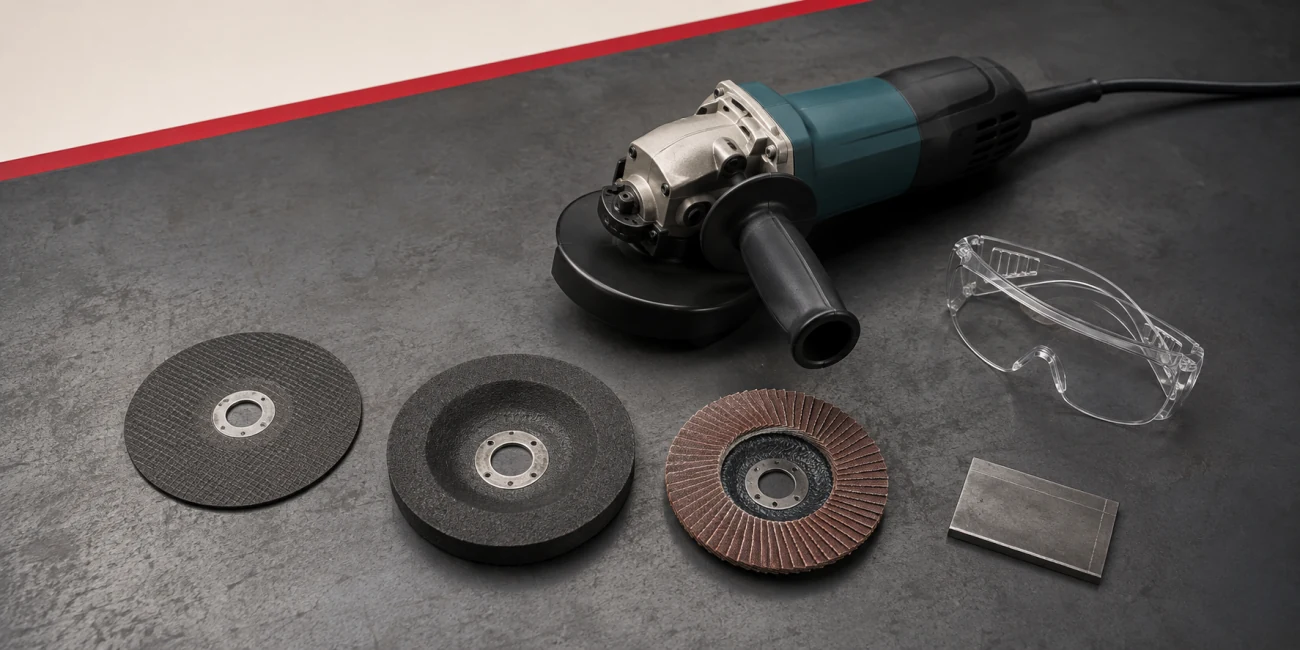
Two things decide whether a wheel is safe on your machine: the bore must match the spindle exactly, and the wheel's rated speed must be at or above your grinder's no-load RPM. Everything after that — abrasive, grit, wheel type — decides how well it cuts. Start with the selection table.
Which wheel for which job
| Job | Wheel type | Typical thickness | Abrasive |
|---|---|---|---|
| Cutting bar, angle, pipe | Cut-off wheel (thin) | 1–3 mm | Aluminium oxide |
| Cutting stainless steel | Cut-off wheel, stainless-rated | 1–2 mm | Zirconia alumina |
| Weld dressing, heavy stock removal | Depressed-centre (DC) grinding wheel | 4–6 mm | Aluminium oxide |
| Blending and finishing a weld | Flap disc | — | Zirconia or aluminium oxide |
| Cast iron, stone, masonry | Grinding wheel or masonry wheel | 4–6 mm | Silicon carbide |
| Chop saw cutting | Large cut-off wheel | 3 mm and up | Aluminium oxide |
These are not interchangeable. The most common — and most dangerous — mistake is side-grinding with a thin cut-off wheel: it is built to take load on its edge, not its face.
Reading the size: diameter × thickness × bore
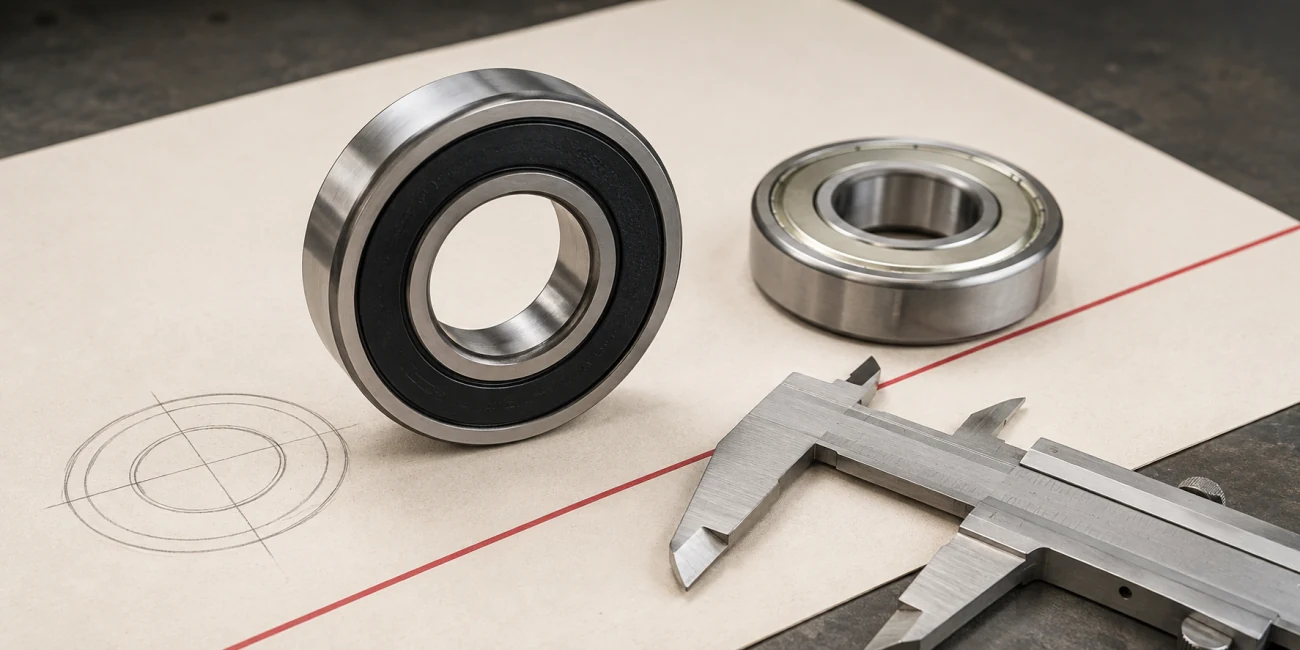
A wheel marked 100 × 6.0 × 16 mm is 100 mm across, 6 mm thick, with a 16 mm bore.
| Dimension | What it controls | Rule |
|---|---|---|
| Diameter | Depth of cut, and the machine it fits | Never fit a wheel larger than the grinder is rated for — the guard will not cover it |
| Thickness | Cutting vs grinding duty | Thin cuts, thick grinds |
| Bore | Fit on the spindle | Must match exactly. A bore packed out with a washer is not a safe fix |
100 mm (4 inch) is the common angle grinder size in Indian workshops; 355 mm (14 inch) is the standard chop saw wheel.
Never exceed the wheel's rated speed
Every wheel is stamped with a maximum operating speed, in RPM or m/s. Compare it against your grinder's no-load RPM — not the speed you expect under load, because a grinder spins fastest with nothing against the wheel. Running a wheel above its rating is the single most common cause of wheel failure.
A smaller wheel spins faster for the same surface speed, which is why a wheel rated for a 180 mm machine is not automatically safe on a 100 mm one. Check the number stamped on the wheel against the number on the machine plate, every time.
Choosing the abrasive
| Abrasive | Best on | Notes |
|---|---|---|
| Aluminium oxide | Mild steel and most ferrous metals | General purpose; the default for fabrication work |
| Zirconia alumina | Stainless steel, harder alloys | Tougher and longer-lasting; costs more per wheel, often less per cut |
| Silicon carbide | Cast iron, non-ferrous metals, stone, masonry | Not for general steel work |
Using an aluminium-oxide wheel on stainless is not unsafe, but it wears faster and can leave iron contamination that encourages rust on the finished surface. For stainless, a wheel that states it is iron-, sulphur- and chlorine-free is worth the difference.
Grit: cutting speed against finish
| Grit range | Removal rate | Finish | Use for |
|---|---|---|---|
| 24–36 | Fast | Coarse | Rough grinding, heavy weld removal |
| 40–60 | Moderate | Medium | General fabrication and maintenance |
| 80–120 | Slow | Smooth | Blending, finishing before paint or polish |
Lower number means coarser grit. If you are unsure, a mid-range grit covers most general-purpose grinding.
Before you switch the grinder on
| Check | Why |
|---|---|
| Inspect the wheel for cracks or chips | A wheel damaged in storage or transport can fail at speed |
| Bore matches the spindle | An adapted or packed bore runs out of balance |
| Wheel RPM ≥ machine no-load RPM | The one check that most often prevents a burst |
| Guard fitted and positioned | Not "just for this job" — the guard is what contains a failure |
| Run 30–60 seconds at speed, clear of people | A wheel that is going to fail usually fails on spin-up |
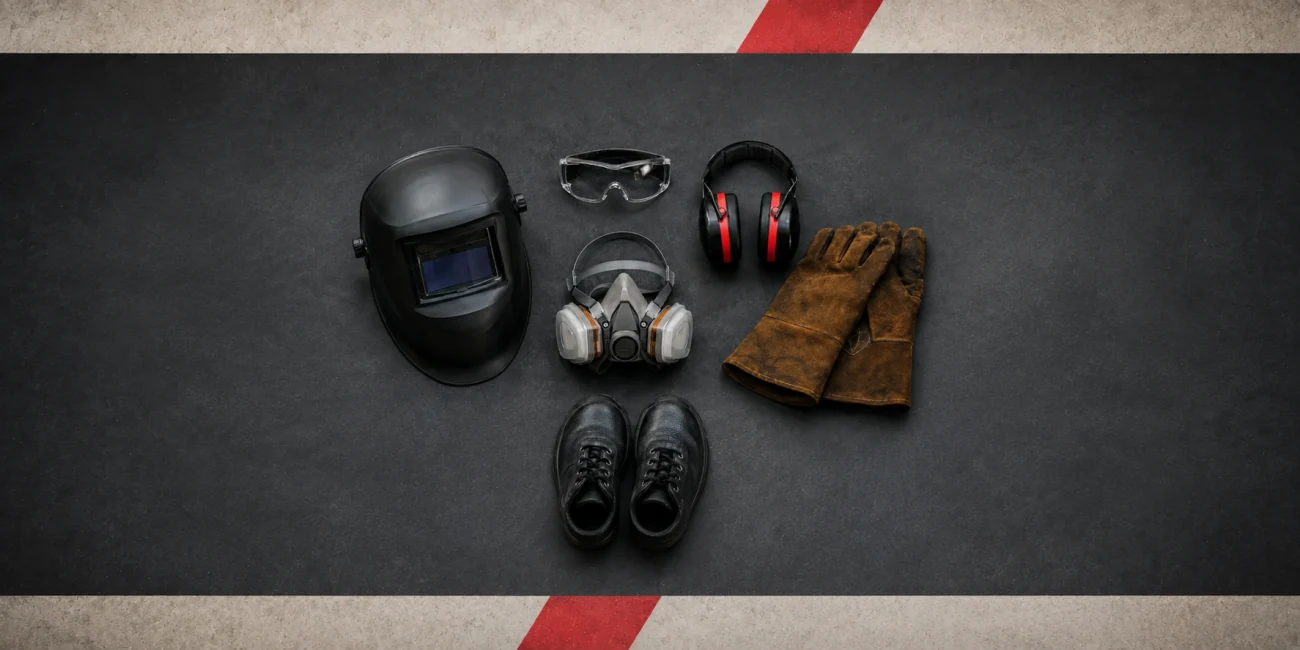
| Eye and face protection on | Goggles at minimum; a face shield for extended work |
Browse abrasive wheels and discs, including cut-off and grinding wheels and flap discs, or see angle grinders and chop saws on Tools Tribe.
Recent Posts