


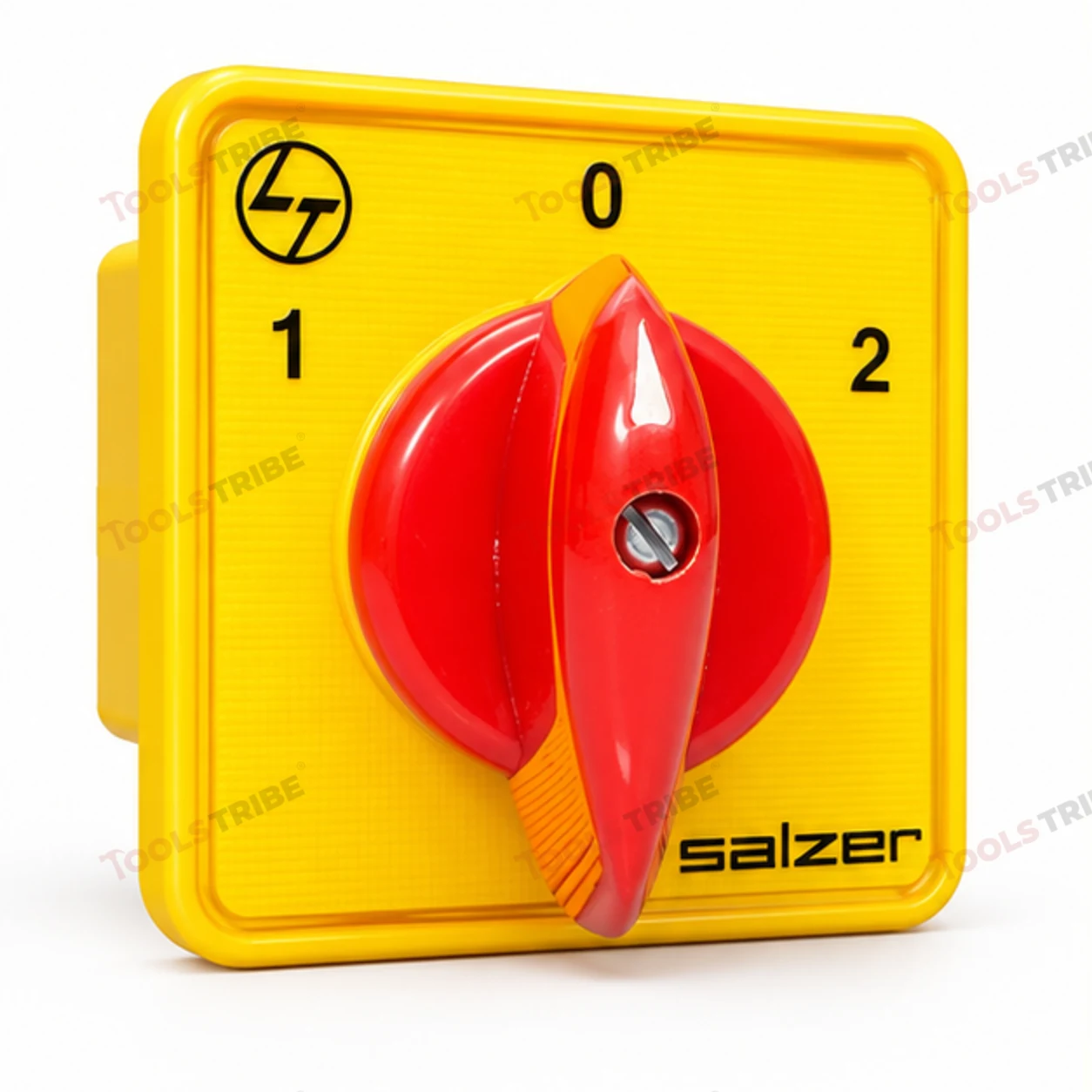
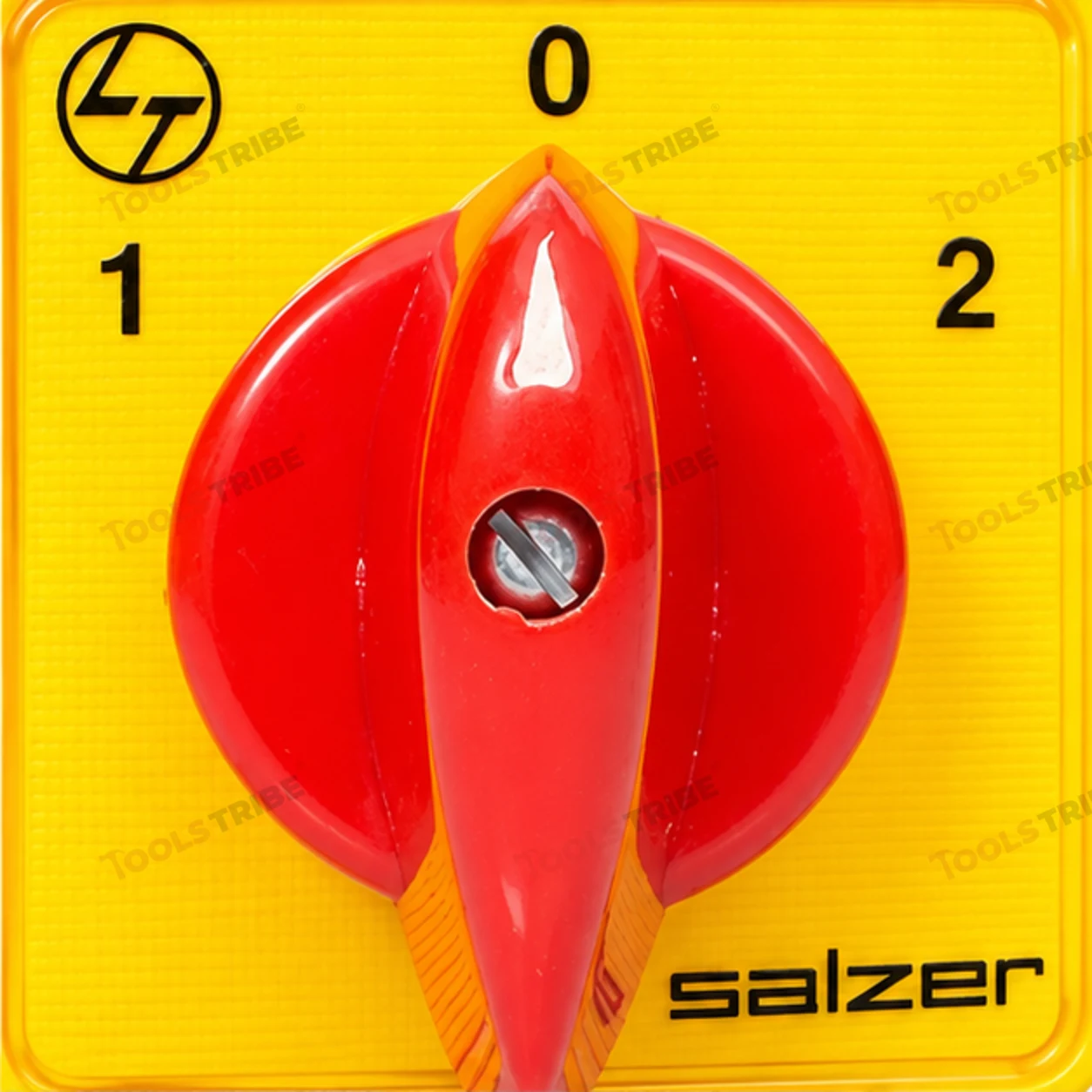
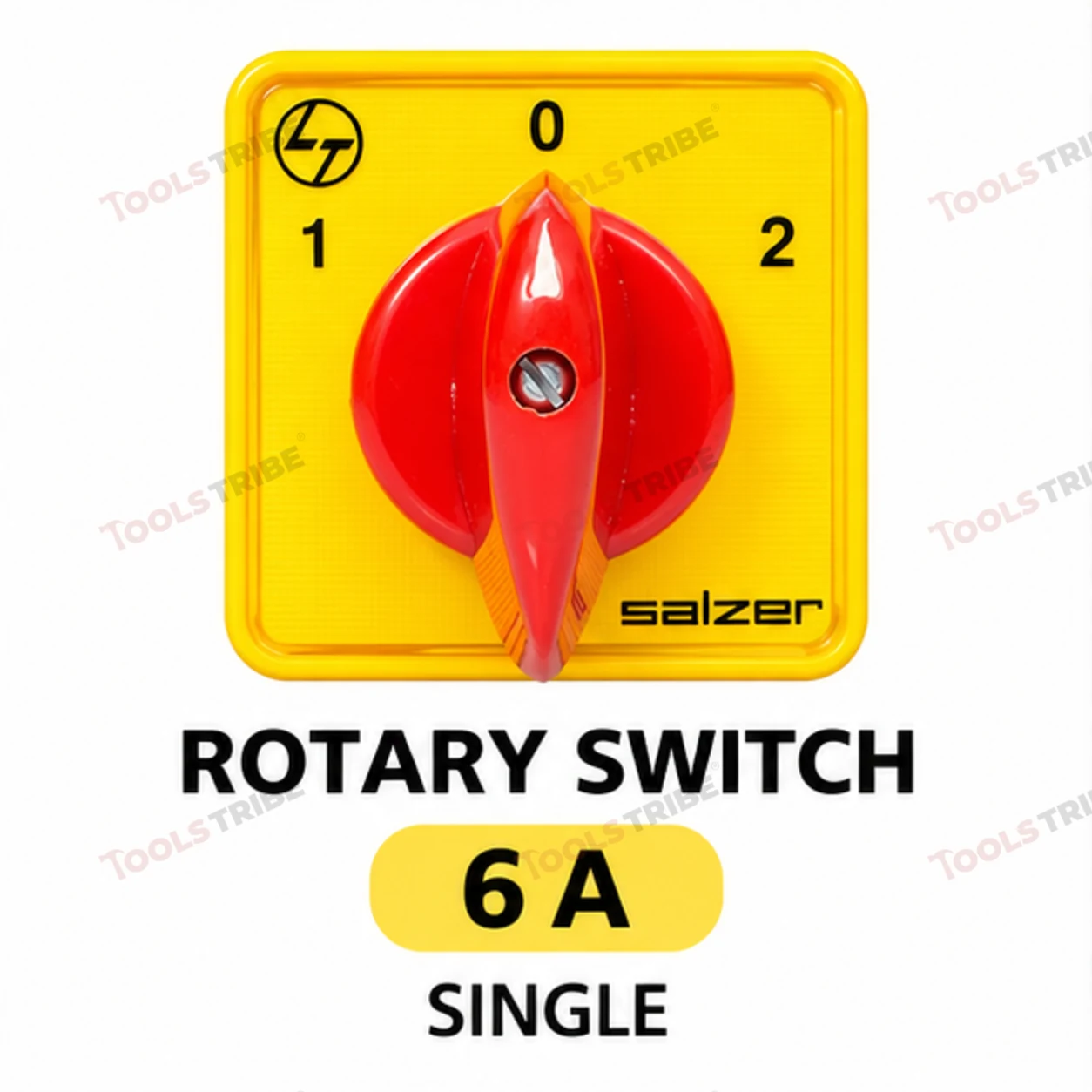
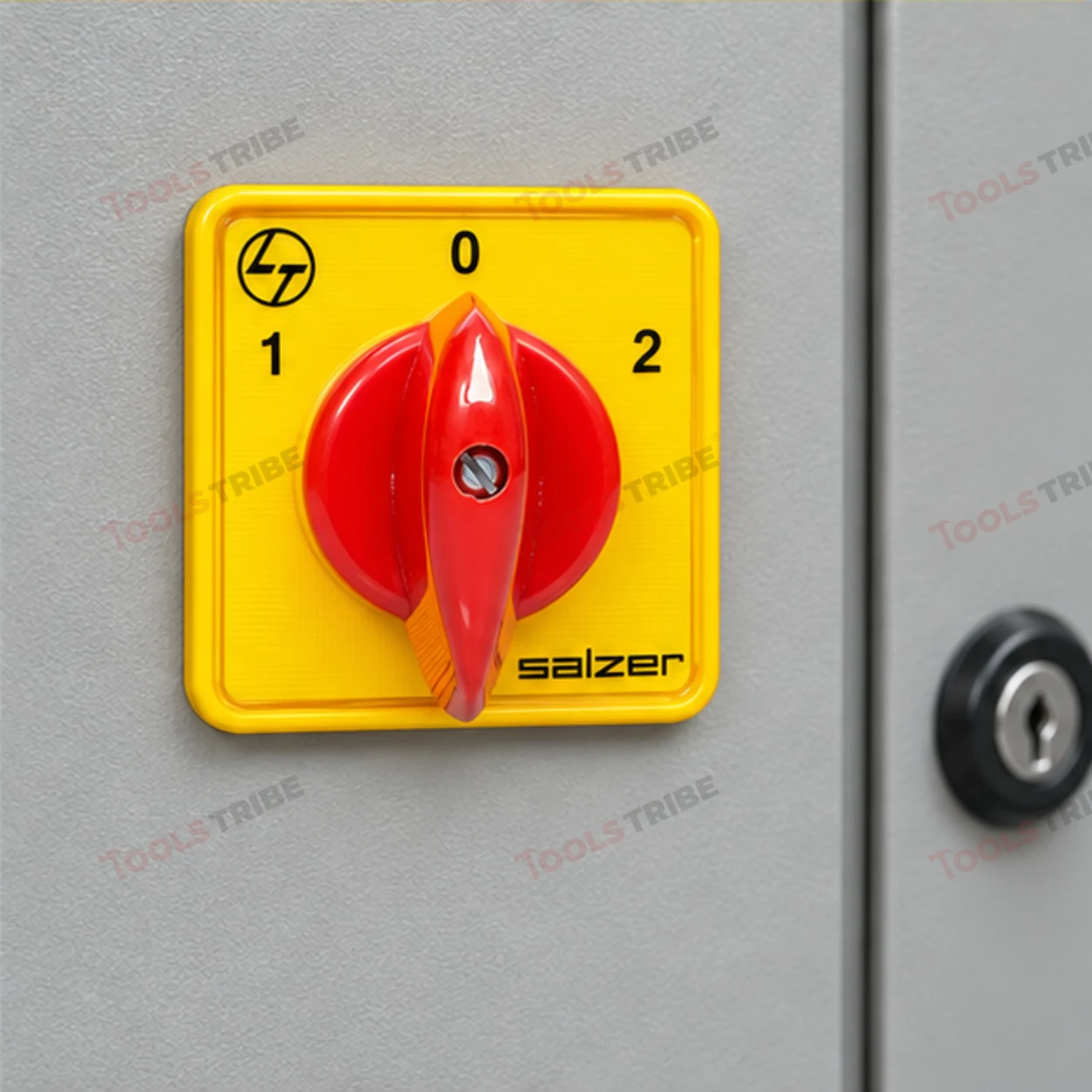
ROTARY SWITCH 6-A SINGAL
Free shipping on orders over ₹ 499.00
Have a GST number? Save up to 18% with input tax credit
Check Delivery Details
Prepaid
available
COD
available
Return
Unavailable
Available Offers
5% instant discount on prepaid payment — Debit/Credit Card, UPI or Net Banking
Features
| Type of Product | Switches, Sockets, Plugs and Connectors |
|---|---|
| Brand | TOOLS TRIBE |
| Weight | 200 g |
| SKU | E-TT-100566 |
Top Brands
100% Buyer Protection
Secure Payments
100% Original Products
| Type of Product | Switches, Sockets, Plugs and Connectors |
|---|---|
| Unit | Piece |
| Brand | TOOLS TRIBE |
| Shipping Type | Flat Rate |
| SKU | E-TT-100566 |
Description
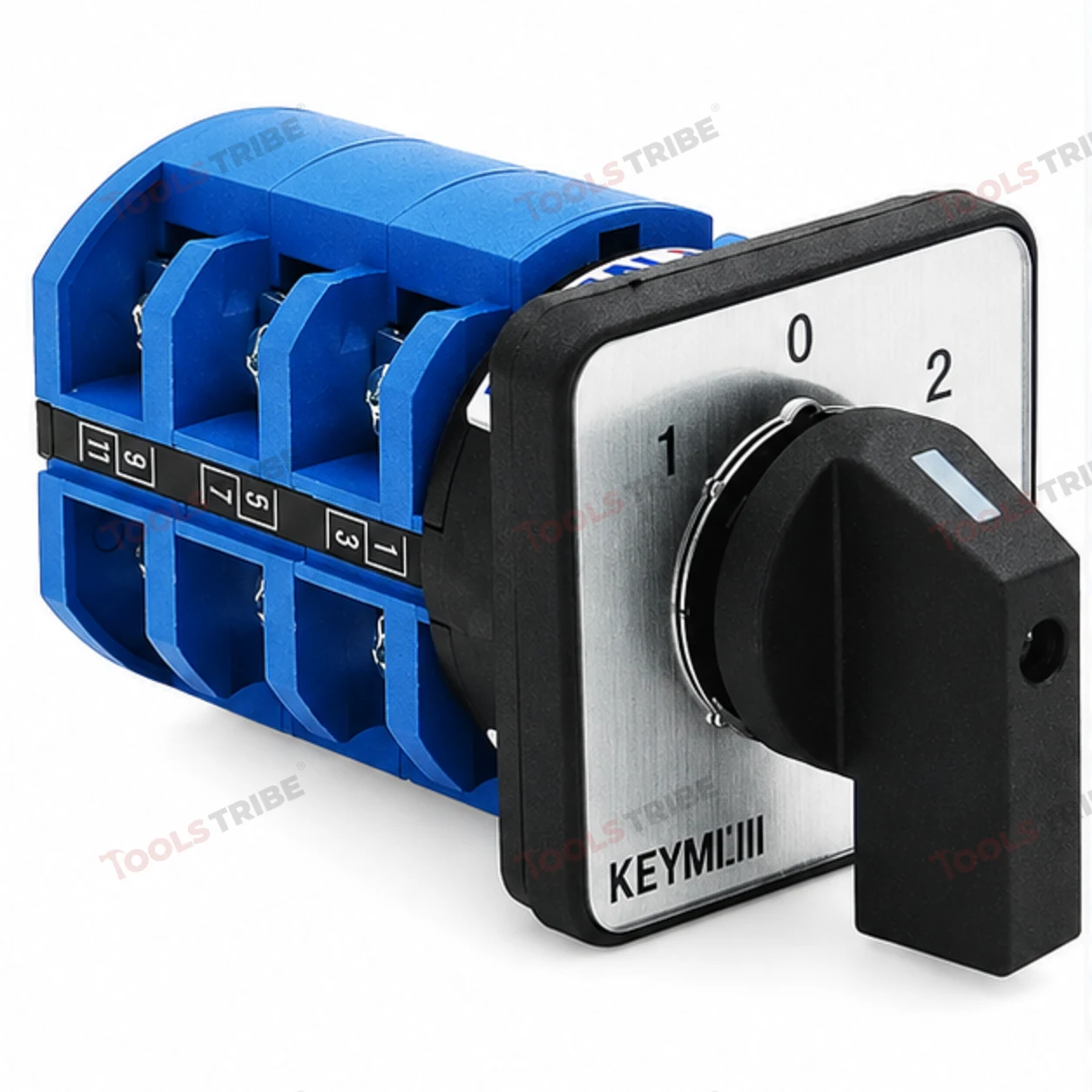
ROTARY SWITCH 6-A SINGLE
A 6A Single-Pole Rotary Switch (often cam-operated) is an industrial-grade, manually operated electrical switch rated to handle a continuous current of 6 Amperes. It utilizes a central rotating shaft equipped with insulated cams to physically force mechanical contacts open or closed as the knob is turned.
The comprehensive technical breakdown, physical components, sequential mechanisms, and safety boundaries for a standard 6A single-pole rotary switch (such as the industry-standard Salzer Cam-Operated Series) include:
1. Key Specifications
• Current Rating: 6 Amps continuous load (S6 rating).
• Operating Voltage: Typically rated up to 440V AC.
• Circuit Configuration: Single-Pole (1-Pole). It controls one incoming electrical path and can route it sequentially to multiple output ways (e.g., 2-way up to 6-way or more).
• Frequency: 50/60 Hz.
• Operating Temperature: Usually ranges from -15°C to 55°C (industrial limits can extend up to 85°C).
2. Physical Components
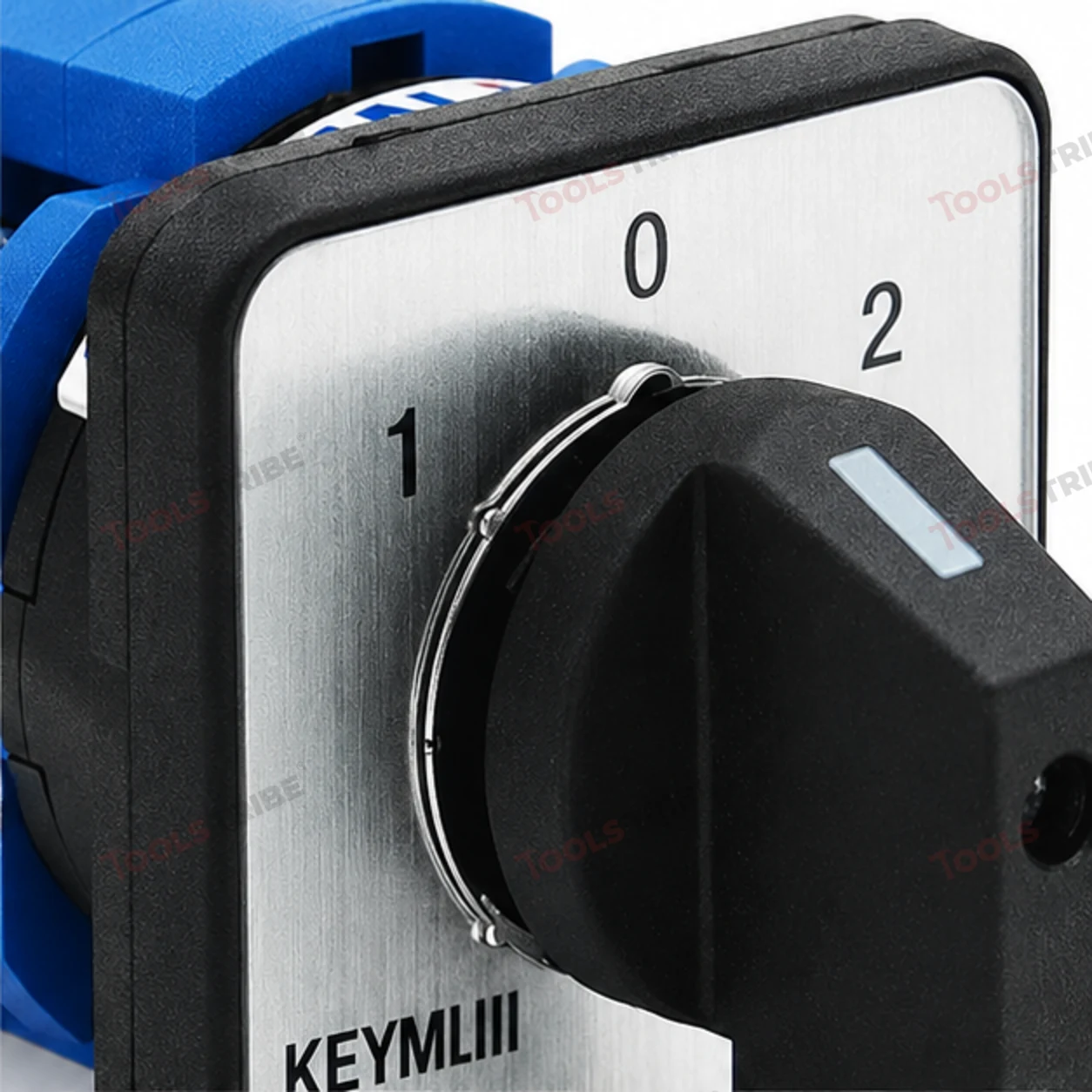
• Rotary Actuator (Knob): The external manual handle used by the operator to select the desired positions.
• Front Faceplate: A markings panel (e.g., displaying "OFF-ON" or "1-2-3-4-5-6") that coordinates with standard mounting footprints like the B13 panel mount.
• Central Cam Shaft: An internal mechanical shaft holding custom-shaped insulated cams.
• Contact Elements: Built using heavy-duty alloy steel, brass, or copper base materials, often featuring Double Break Silver Cadmium Oxide (AgCdO) contact tips to minimize electrical resistance.
• Housing Body: Made of glass-filled polyamide or Bakelite for high dielectric strength and heat insulation.
• Termination Box: Heavy-duty rear screw terminals designed to tightly clamp fork/ring crimp wire lugs.
3. Sequential Mechanism
1. Manual Actuation: The user rotates the external knob to a specific index angle (commonly 60° or 90° throws).
2. Cam Displacement: The central shaft rotates, causing the high points of the insulated cams to physically press against or release the spring-loaded contacts.
3. Wiping Action: As the heavy-duty contacts slide open or closed, they execute a mechanical "wiping" motion. This action actively cleans away carbon buildup or oxidation from minor electrical arcing.
4. Circuit Routing: The single input current path is disconnected from its previous line and routed safely to the newly selected terminal output.
4. Safety & Environmental Boundaries
• Enclosure Limitations: While the front faceplate can resist dust inside a control panel door (often matching IP65 standards), the rear switch body and screw terminals are completely exposed. It must be enclosed inside a protective panel or box.
• Wire Gauge Bounds: To safely run a full 6A load through the switch, it is recommended to terminate with a minimum of 18 AWG wires, though 16 AWG or 14 AWG stranded copper wire provides better long-term thermal safety.
• Inductive Load Restrictions: While highly reliable for resistive loads and low-voltage DC logic routing, a single-pole layout cannot natively reverse polarity on machinery like DC motors (which requires a multi-pole configuration)







Share with Friends
Trading is more effective when you share products with friends!Share you link
Share to